单例模式
全局只需要创建一个,也只能有一个,比如太阳/月亮等
类型
| 类型 | 思想 | 代码图片 |
|---|---|---|
| 懒汉模式 | 能不创建就不创建,但是可能会有线程安全的问题 | 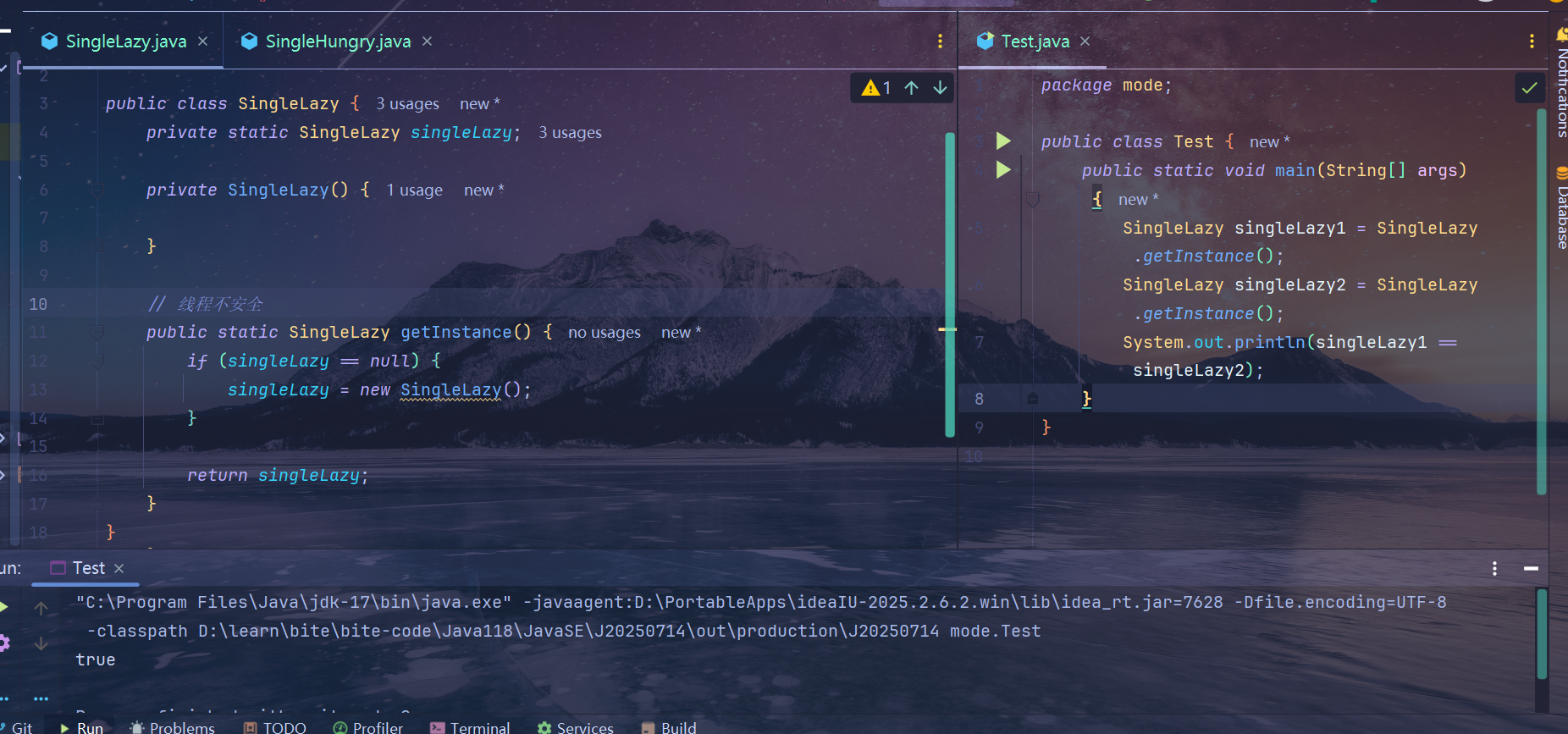 |
| 饿汉模式 | 尽快创建,在项目启动/应用调用的时候就创建 | 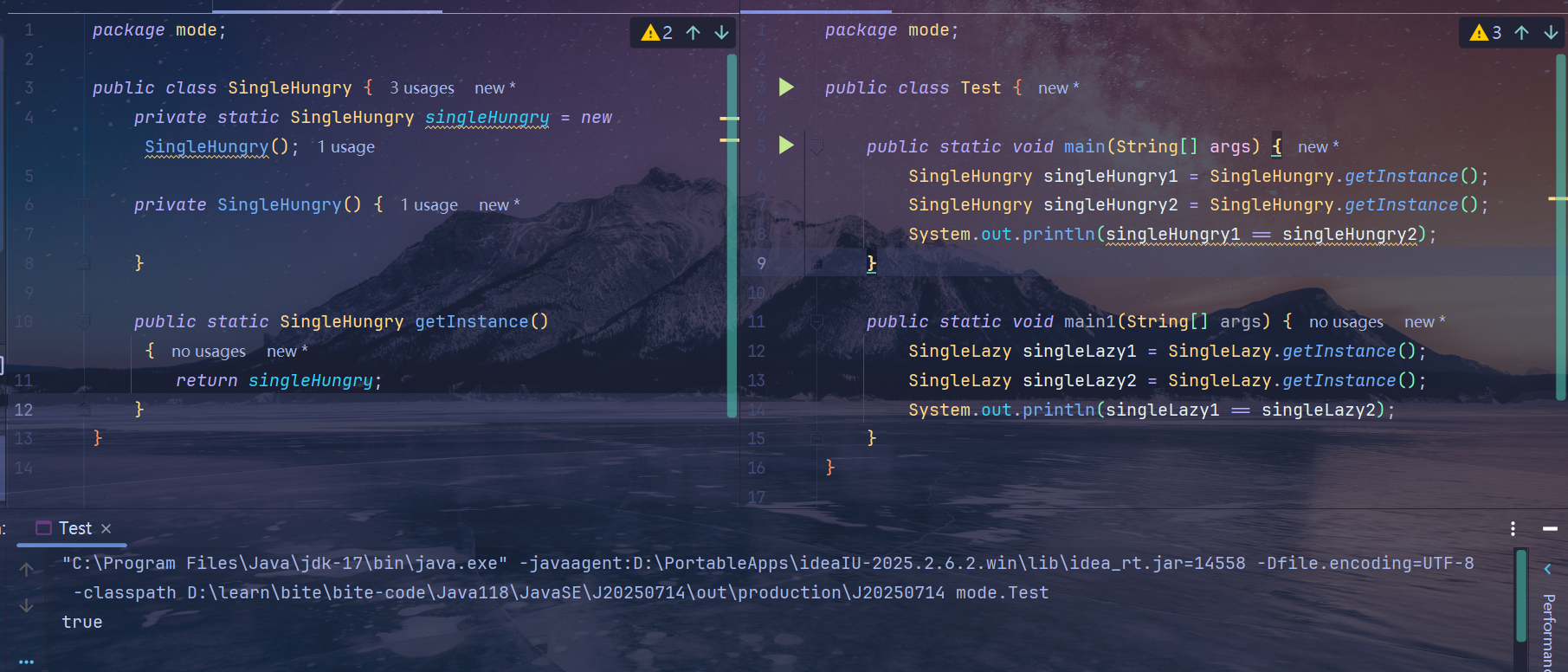 |
应用
- 线程池/连接池等池化技术
线程安全问题
线程安全问题只会在懒汉模式下有,饿汉模式的没有线程安全问题的
针对下述代码,指出并修改相关的线程安全问题
Java
class SingletonLazy {
    private static SingletonLazy instance; // 1.

    public static SingletonLazy getInstance() { // 2.

        if (instance == null) { // 3.
            instance = new SingletonLazy(); // 4.
        }

        return instance; // 5.
    }

    private SingletonLazy() { // 6.
    }
}

最终代码(请思考最终代码中的问题)
Java
class SingletonLazy {
    private static volatile SingletonLazy instance;

    public static SingletonLazy getInstance() {
        // 问题:为什么这里是有两个 if 判定?这两个 if 判定的作用分别是什么?
        if (instance == null) {
            synchronized (SingletonLazy.class) {
                if (instance == null) {
                    instance = new SingletonLazy();
                }
            }
        }
        return instance;
    }

    private SingletonLazy() {
    }
}

public class Demo1 {
    public static void main(String[] args) {
        SingletonLazy instance = SingletonLazy.getInstance();
        // instance.func();
    }
}问题答案:
第一个 if 是用来避免锁调用造成的阻塞问题
第二个 if 是保障代码是线程安全